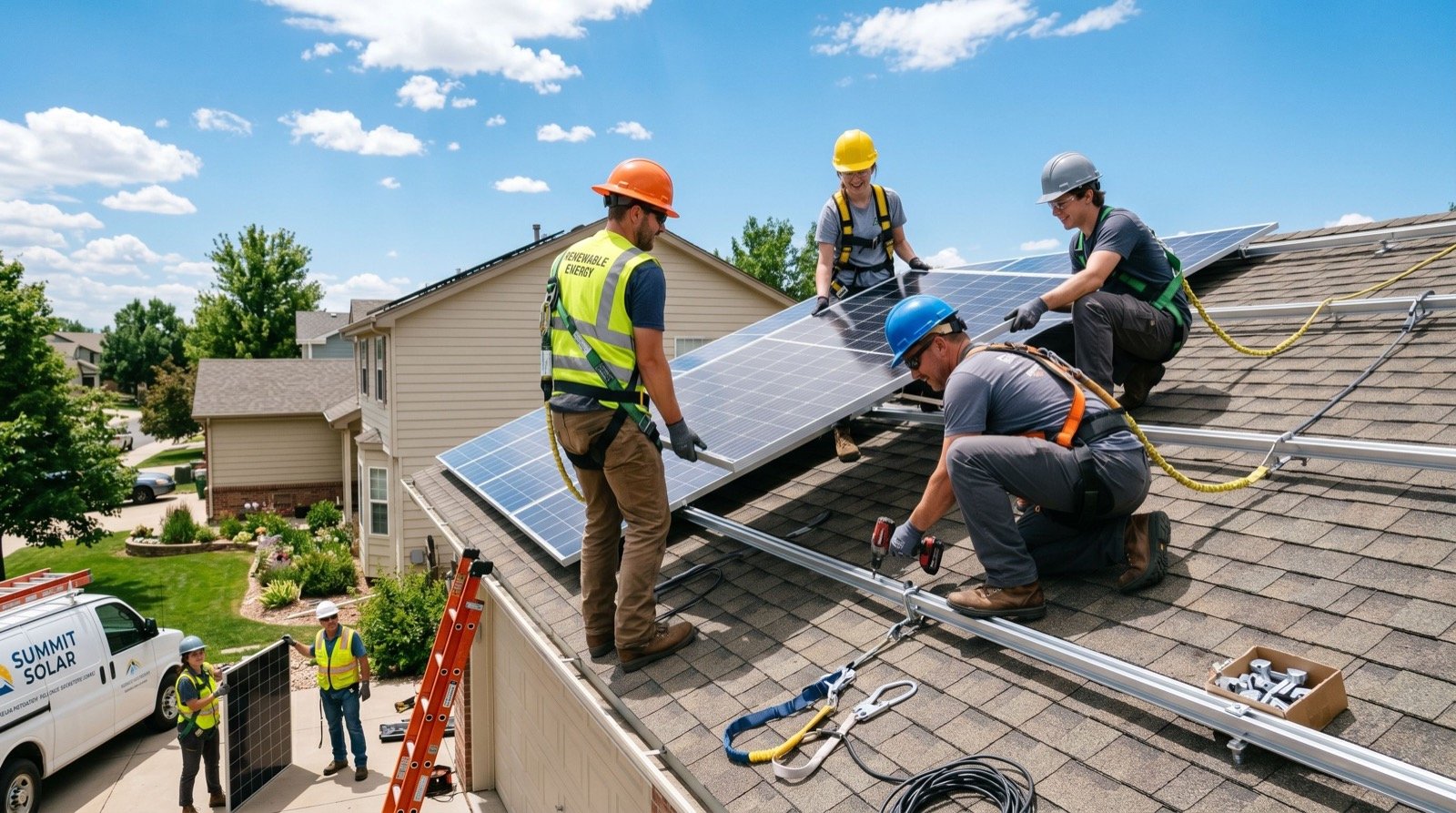

Solar Company in Gujranwala: How Businesses Cut Power Costs in 2026
Gujranwala runs on electricity. From fan and foundry units to food processors and retail plazas, the city’s economy lives or dies on a steady, affordable supply. That is exactly why choosing the right solar company in Gujranwala has become a boardroom decision in 2026, not just a household one. Rising industrial tariffs and unreliable grid hours are pushing owners to generate their own power on their own roofs.
This article is written for the owner who wants numbers, not slogans. We break down what a commercial solar system actually delivers, how to vet an installer for an industrial load, and the real payback timeline a Gujranwala factory can expect this year.
The Business Case for Solar in an Industrial City
Commercial users sit in the highest tariff slabs, so every self-generated unit saves more here than it does for a small home. Add demand charges and peak-hour penalties, and a well-designed array quietly rewrites your profit-and-loss statement.
Three forces make 2026 the tipping point for Gujranwala businesses:
- Tariff pressure: commercial per-unit costs keep climbing, widening the gap solar fills.
- Daytime load match: factories and shops consume most power while the sun is up — a near-perfect fit for solar without heavy battery spend.
- Net metering credit: weekend and holiday surplus feeds the grid and offsets weekday bills.
Owners who also run facilities in the twin cities often bundle their rollout with a trusted partner for solar installation in Rawalpindi, keeping one design standard and one warranty desk across sites.
What Size System Does a Gujranwala Business Need?
Commercial sizing starts with your connected load and your daytime duty cycle, not just your bill. A retail plaza with air conditioning behaves very differently from a single-shift fan assembly unit. A capable installer logs your consumption for a few days before proposing anything.
Comparing System Types for Commercial Roofs
Not every business needs the same setup. The table below shows the three common configurations and who each suits best.
| System type | Best for | Battery | Relative upfront cost |
|---|---|---|---|
| On-grid (net metered) | Daytime-heavy shops & units | None | Lowest |
| Hybrid | Operations needing backup during outages | Partial | Medium |
| Off-grid | Remote sites with no reliable grid | Full | Highest |
For most Gujranwala enterprises, an on-grid system delivers the fastest return. A hybrid makes sense where a sudden outage spoils product — think cold storage or a process that cannot restart cheaply.
How Do You Vet a Solar Company in Gujranwala?
Industrial installs carry higher stakes than a home rooftop. A loose connection on a 50 kW array is a fire risk and a production-downtime risk. Use this checklist when you shortlist vendors:
- Commercial references: ask to see at least two running systems of similar size in the region.
- Structural assessment: the crew must confirm your roof or shed can carry the mounting load.
- Branded components: tier-one panels and a reputable inverter with local service support.
- Monitoring: a dashboard so you can see each day’s generation and spot faults early.
- Documented safety: proper earthing, surge protection, and DC isolation to code.
Pakistan’s regulator publishes the net-metering framework these systems plug into; reviewing the National Electric Power Regulatory Authority rules helps you ask sharper questions. For technology benchmarks, the International Renewable Energy Agency tracks how fast solar costs have fallen worldwide — a useful reality check on any quote.
Real Payback: What the Numbers Look Like in 2026
Consider a mid-sized Gujranwala unit paying a high commercial tariff and consuming most of its power by day. A 25 kW on-grid system in this scenario commonly returns its cost in roughly three to four years. After that, the roof produces near-free electricity for two more decades.
Here is why commercial payback beats residential:
- Higher baseline tariff means bigger per-unit savings.
- Strong daytime usage means almost every generated unit is consumed on site.
- Economies of scale lower the cost per installed kilowatt.
From first-hand project experience, the firms that squeeze the most value are those that monitor output monthly and clean panels on schedule. A 5–7% yield loss from dust is easy to ignore and expensive to accept across a large array.
Financing Without Draining Working Capital
Many 2026 installs are structured so the monthly saving roughly covers an instalment, letting owners preserve cash flow. Ask your installer to model a financed scenario beside an outright purchase so you can compare the true cost of each path.
Common Mistakes Gujranwala Owners Make
Even savvy business owners trip over the same avoidable errors. Watch for these before you commit:
- Sizing to the bill, not the load: a bill reflects grid imports, not your full daytime demand. A proper load study prevents an undersized array that disappoints.
- Ignoring roof condition: mounting a 25-year system on a roof due for repair means dismantling it later. Fix the roof first.
- Chasing the lowest quote: thin cables and generic inverters save money today and cost production tomorrow.
- Skipping monitoring: without a dashboard, a failed string can go unnoticed for weeks, quietly burning your savings.
- Forgetting future expansion: if you plan to add machinery, size the inverter and wiring with headroom now.
Owners who avoid these five traps consistently report smoother approvals, higher yield, and fewer service calls in their first year. A single afternoon of careful planning protects decades of returns.
Frequently Asked Questions
How long does commercial solar installation in Rawalpindi or Gujranwala take?
A 20–30 kW rooftop system typically takes three to five working days to mount and wire. Larger plants scale accordingly. Net-metering approval runs in parallel on the utility side.
Will solar keep my factory running during load-shedding?
An on-grid system shuts off during a grid outage for safety. If uninterrupted production matters, a hybrid system with a battery buffer keeps critical circuits alive through the cut.
How do I choose the best solar company in Gujranwala for a large load?
Prioritise commercial track record, branded components, structural sign-off, and live monitoring. The cheapest quote rarely wins once you weigh downtime and warranty risk.
Does net metering suit weekend-closed businesses?
Yes. Panels keep producing on your days off, exporting surplus to the grid and building credit that trims your weekday bills.
Conclusion: Make Your Roof a Profit Centre
For a Gujranwala business, solar is no longer a green gesture — it is one of the cleanest returns available on an idle asset, your rooftop. Size it to your real load, insist on commercial-grade safety, and track the output. When you compare proposals, lean on reliable local experts who show their workings and back their numbers. The right solar company in Gujranwala turns a rising cost into a shrinking one — starting this year.