Queue Management System in Saudi Arabia: The 2026 Guide for Smarter Customer Flow
Long lines quietly cost businesses more than most owners realize. A modern queue management system in Saudi Arabia turns chaotic waiting areas into organized, measurable, and pleasant experiences. In 2026, customers expect service that respects their time, and the technology to deliver it has never been more accessible.
This guide breaks down how queue management works, why it matters for banks, clinics, government offices, and retail, and what to look for when you invest. Whether you run a single branch or a national network, the fundamentals are the same: reduce wait times, capture data, and keep people informed.
Why a Queue Management System Matters in 2026
Waiting is one of the biggest sources of customer frustration. Studies on service psychology consistently show that unexplained, disorganized waits feel far longer than they actually are. A good system fixes the perception and the reality at the same time.
Across Saudi Arabia, Vision 2030 initiatives push both public and private sectors toward digital, customer-first service. Ticketing kiosks, mobile check-in, and live dashboards are now standard in high-traffic venues. Businesses that ignore this trend risk losing customers to competitors who make waiting effortless.
Here is what a well-designed queue system delivers:
- Shorter perceived and actual wait times
- Fair, transparent, first-come-first-served ordering
- Real-time data on staff performance and peak hours
- Better staff planning and fewer idle or overloaded counters
- A calmer, more professional customer environment
How Does a Queue Management System Work?
Most systems follow a simple journey. The customer arrives, checks in, waits comfortably, and gets called to the right counter. Behind the scenes, software tracks every step so managers can measure and improve.
The Core Components
A complete deployment usually combines several building blocks. Each plays a role in guiding the customer and feeding data back to management.
- Check-in point: a kiosk, tablet, or mobile app where customers select a service and receive a ticket.
- Queue logic: software that routes each visitor to the correct department or agent.
- Display screens: monitors that announce ticket numbers and counter assignments.
- Counter terminal: the staff interface used to call the next customer.
- Analytics dashboard: reporting on wait times, service times, and traffic patterns.
Vendors like queue management system in saudi arabia specialists help you assemble these pieces into one smooth workflow tailored to your branch layout and service mix.
Comparing Queue Management Approaches
Not every business needs the same setup. A small clinic has different needs than a busy telecom store or a passport office. The table below compares common approaches so you can match a model to your traffic.
| Approach | Best For | Key Strength | Consideration |
|---|---|---|---|
| Simple ticket dispenser | Small shops, pharmacies | Low cost, easy setup | Limited reporting |
| Multi-service kiosk | Banks, telecom, government | Routes by service type | Needs staff training |
| Mobile virtual queue | Clinics, retail chains | Customers wait anywhere | Requires app or SMS |
| Appointment + walk-in hybrid | Hospitals, service centers | Balances both traffic types | More complex logic |
Key Features to Look For When Buying
The market is crowded, so focus on features that create measurable value. A flashy screen means little if the reporting is weak or the hardware fails under load.
Must-Have Capabilities
Before you sign a contract, confirm the system offers these essentials. They separate a professional deployment from a gimmick.
- Arabic and English support: full bilingual interfaces for staff and customers.
- Real-time analytics: live and historical dashboards, exportable reports.
- Scalability: the ability to add counters, branches, and services without a rebuild.
- Integration: connections to CRM, feedback tools, and digital signage.
- Reliability: dependable hardware and local support you can reach quickly.
Reliability is easy to overlook until a screen goes dark during peak hours. Choose a partner known for solid installation and responsive service, such as the dependable specialists other businesses trust for consistent results.
From experience deploying these systems, the difference between a good and a poor vendor shows up during the first busy week, not in the sales demo. Ask for local references, confirm the support response time in writing, and make sure spare hardware is stocked in-country. Those details protect you when it matters most.
Beyond Queues: Drive-Thru and Communication Systems
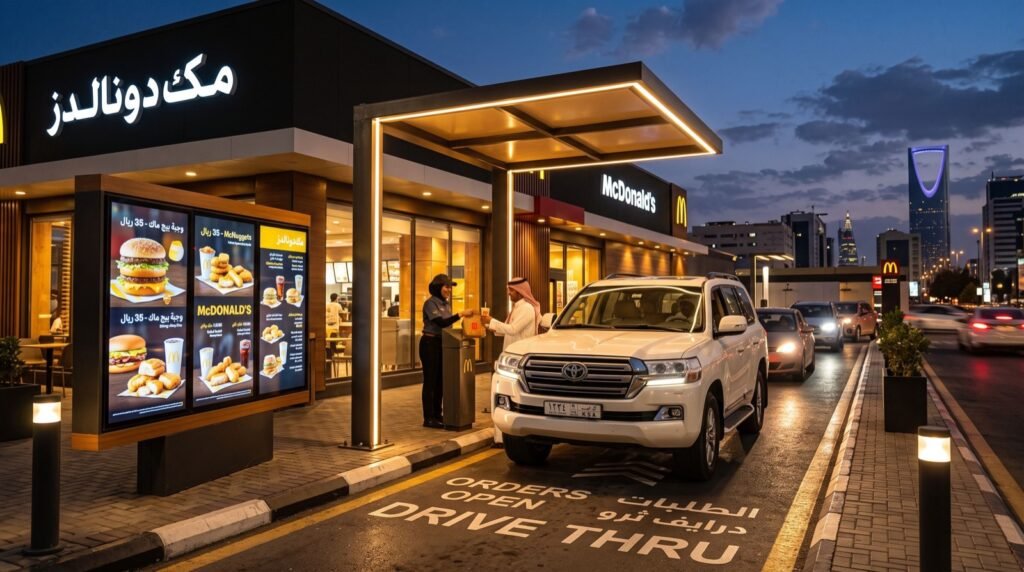
Customer flow is not limited to indoor lobbies. Quick-service restaurants and pharmacies increasingly rely on drive-thru lanes, where clear audio and fast order handling drive revenue. Modern headset and intercom systems keep staff and customers connected even in noisy environments.
A reliable HME Drive Thru in Riyadh solution combines crisp audio, timer analytics, and rugged hardware built for outdoor use. Pairing indoor queue systems with drive-thru communication gives a business full visibility over every customer touchpoint.
Both systems share the same goal: move people through service faster while capturing the data managers need to keep improving.
Measuring Success and ROI
Technology is only worth it if you can prove the payback. Fortunately, queue systems generate exactly the metrics you need to justify the investment.
Track these indicators after go-live:
- Average and maximum wait time per service
- Average service time per agent
- Abandonment rate, or customers who leave before service
- Peak-hour traffic distribution
- Customer satisfaction scores tied to specific counters
For broader context on how digital service standards are evolving, the International Telecommunication Union tracks global technology adoption trends that shape customer-experience expectations worldwide.
Frequently Asked Questions
How much does a queue management system in Saudi Arabia cost?
Pricing depends on the number of branches, counters, and features. A basic single-counter setup is affordable, while multi-branch systems with analytics and mobile queuing cost more. Most vendors offer scalable packages, so you can start small and expand as traffic grows.
Can customers join a queue from their phone?
Yes. Many 2026 systems support virtual queuing through SMS or a mobile app, letting customers reserve a spot and wait wherever they like. They receive a notification when their turn approaches, which reduces crowding in the lobby.
Does a queue system work for both walk-ins and appointments?
Modern hybrid systems handle both. They blend scheduled appointments with walk-in traffic and route each customer intelligently, so neither group is neglected. This is ideal for clinics, banks, and government service centers.
How long does installation take?
A single branch can often be live within a few days once hardware arrives and staff are trained. Larger networks take longer, but a good vendor phases the rollout to minimize disruption to daily operations.
Conclusion: Turn Waiting Into a Competitive Advantage
In 2026, customer patience is thinner than ever, and organized service is a clear differentiator. A well-chosen queue management system in Saudi Arabia shortens waits, delights customers, and hands managers the data they need to run leaner, smarter branches.
Ready to modernize your customer flow? Talk to an experienced provider, request a demo, and see how the right queue and drive-thru technology can transform your service experience this year.